
Our Services
Turn Biodiversity Data Into Actionable Intelligence
Biodiversity monitoring and Measurement, Reporting, and Verification (MRV) solutions around your landscape, goals, and evidence needs. Understand which species are present, how ecosystems are changing, and whether your work is making a difference.
What We Can Measure
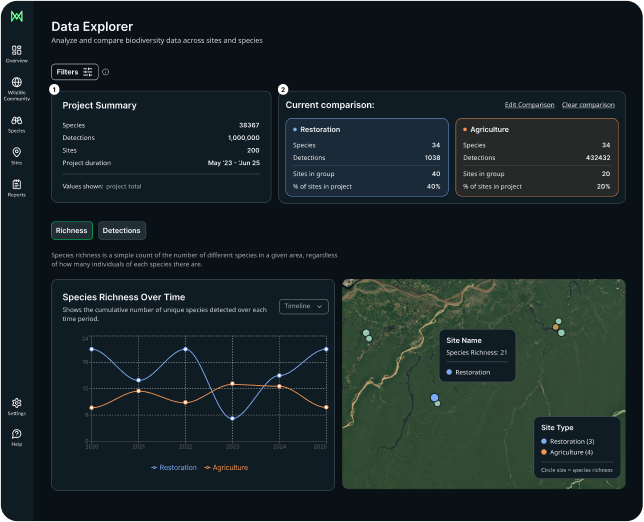
We turn field observations into insights you can use to plan, evaluate, and communicate your work.

Species

Presence, distribution, richness, and species of concern.

Communities
Community composition and indicator groups.

Landscapes
Biodiversity hotspots and spatial patterns.
Change over time
Ecological trends, persistence, and responses to interventions
How We Measure It
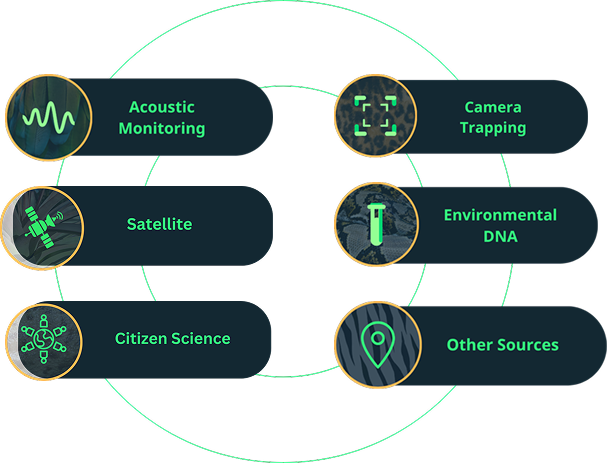
We combine complementary sources of biodiversity evidence to suit the species, ecosystem, and scale of your project.
AI Analysis Made for Scale
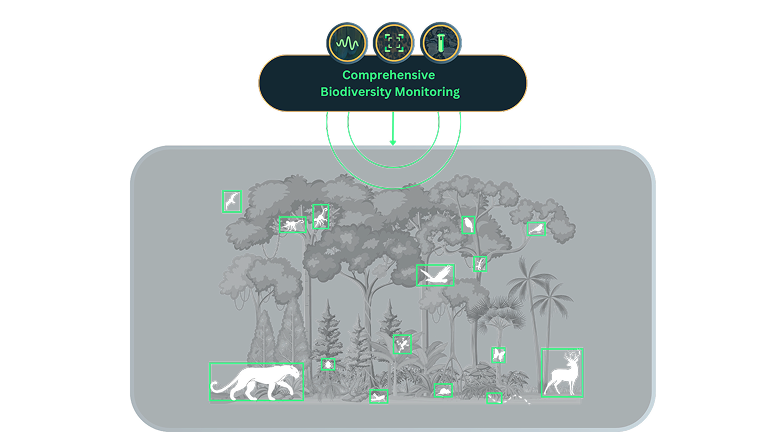
We combine cloud computing, flexible AI workflows, and ecological expertise to turn large volumes of biodiversity data into usable evidence. Our workflows bring together recordings, images, and other ecological data from across sites and monitoring periods.
Process data at scale
We distribute processing across our cloud infrastructure, analyzing large datasets in parallel and reusing extracted features to make subsequent analyses faster.

Use the right AI for the question
We combine established models, specialist tools, and partner technologies according to the data and monitoring goals. Our workflows can incorporate new models as technology advances.
Look beyond standard detections
For acoustic data, similarity searches help us find sounds that match reference calls, including species not covered by existing classifiers. Ecological context helps focus analysis on relevant species and habitats.

Validate and Interpret
Human review checks AI-generated results, with filters that focus attention on the evidence needed for your project. We then apply ecological analysis to understand biodiversity patterns and change.
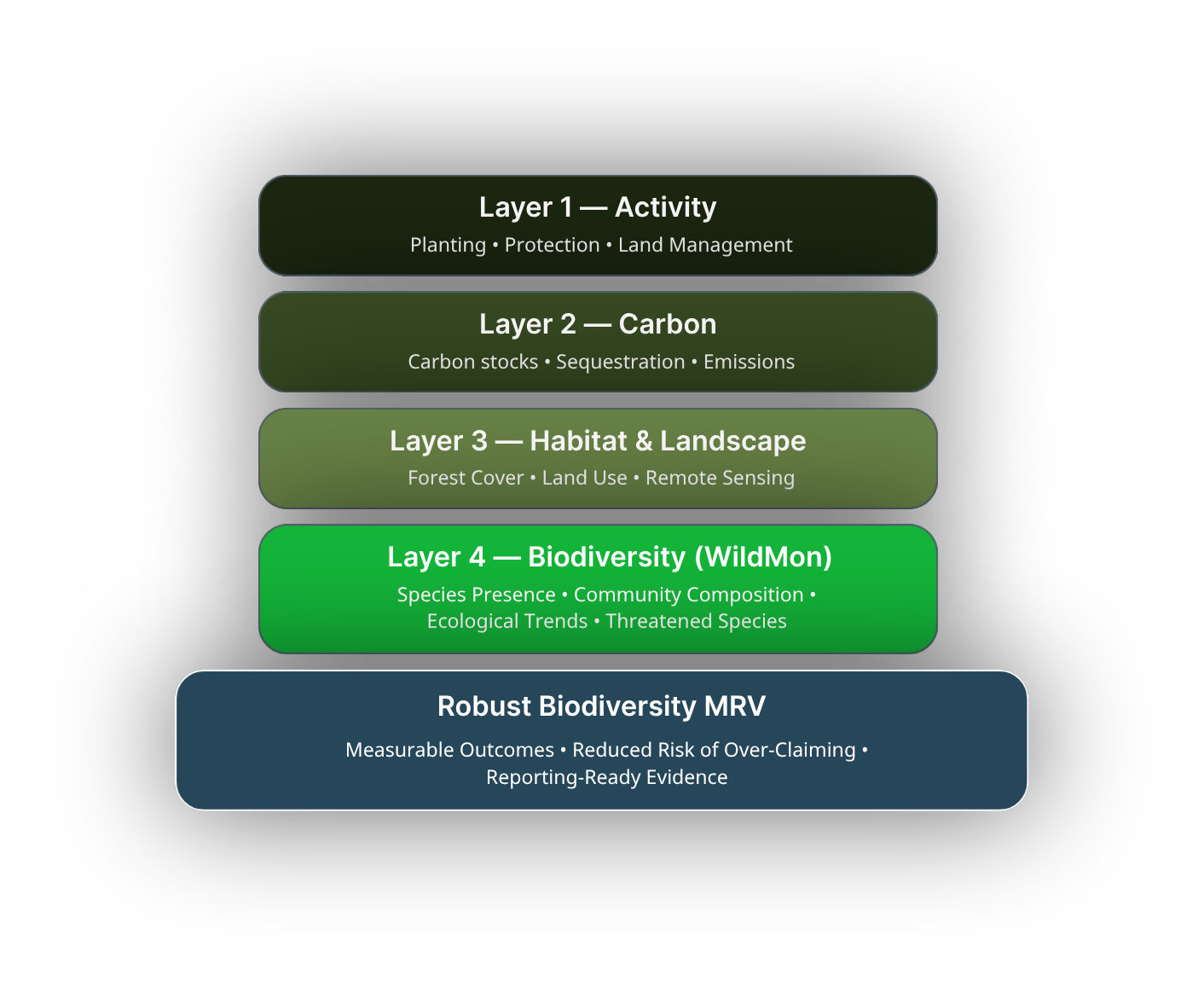
Add the Biodiversity Layer to Your MRV
Planting, land management, carbon, and habitat data tell you what has been done and how a landscape is changing. Direct biodiversity monitoring helps show how wildlife and ecological communities are responding.